Turn the followers you already have into paying clients, with a 5-day email course.
Built in four weeks. Written for health experts, out of the content and expertise you already have. You don't write anything.

We'll plan your course outline.

Dr. Sean O'Mara. Visceral fat physician, 13 years of clinical experience, patient list full of executives. Over six months I wrote his LinkedIn posts, and he occasionally posted himself as well.
Average impressions per post over the same six months.
Your posts do well. But your calendar stays empty.
I call this the friend-zone stage. People like you enough to read you, but not enough to book you.
Here's what it costs. Say your program is $2,000, and 994 people look at your LinkedIn profile this month. If 0.5% of them booked, that's 5 clients and $10,000.
Most health experts I talk to convert zero of them. The problem is that there's nothing sitting between the LinkedIn posts and the booking page.
And the fix everyone thinks of is to simply post more, which costs you the one thing you have the least of: time.
This is for you if:
You sell a $99 guide to an audience that isn't warmed up enough to buy it.
You post, you get real engagement, and almost nobody becomes a paying client.
You're a coach filling cohorts by speaking at events and hoping the audience signs up.
You're a physician whose podcast appearances haven't brought you a single patient.
You have a media team and still aren't reaching the executive-level clients you wish for.
This isn't for you if you're still building an audience. An email course captures existing demand; it doesn't create it.
I build you a Patient Activation Flow.
A newsletter is a multivitamin. Good for keeping a relationship alive but useless for making someone buy right now.
This is a five-day email course, written to move a reader from "I like this doctor" to "I'm booking an appointment."
And unlike a PDF where they forget about you in their downloads folder a day later, with this, you're directly in their inbox all week.
Validate the pain they're already in.
Reveal the real cause of it.
Teach your method.
Show proof it works.
Invite them to work with you.
Dr. Sean O'Mara
Sean O'Mara wasn't happy with his LinkedIn. So I took over for six months.
He didn't write a word for my posts. I took from his podcast appearances, his other social accounts, and his patient testimonials, and turned it all into posts.
My best three posts
35% of my posts cleared 5,000 impressions. 14% of his did.
Disclaimer: this measures his reach and engagement, not his direct revenue.
Four steps, four weeks.

We spend 40 minutes on a call working out the outline and where I can help most.

I write the course and a landing page to go with it. First draft in three weeks.

If you'd like to make changes, I send the revised version back within a week.

I help you publish it.
Your whole involvement is the first call and one round of notes. I don't need you to write, record, or research anything.
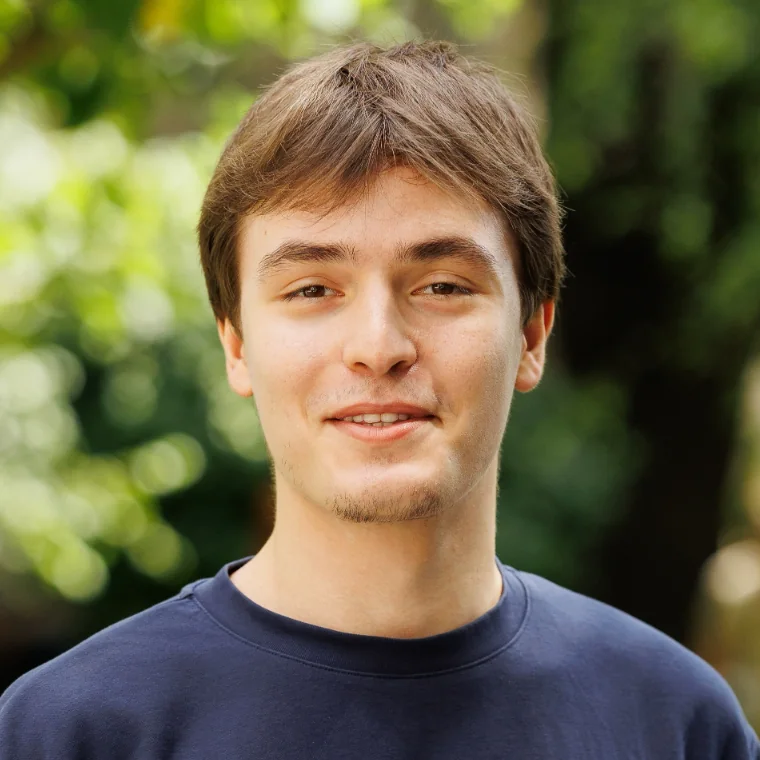
Look, I didn't expect to end up here.
For two years I wrote a self-help newsletter to a bunch of crickets. I kept going anyway, which in hindsight taught me persistence.
Then I started writing for people in health, and found something I was good at: taking what an expert already knows and putting it in front of the people who need to hear it. I learned that most experts don't really have a problem with sharing their knowledge; their problem is time and writing to sell.
So now I write for health experts full time. It's the best decision I've made.
If you read the finished course and you're not happy with it, I refund every penny. And because you gave me four weeks of your attention, I'll write one of your social channels for a month, free, to make up for it.
You keep the course either way.
Questions
Think of a newsletter as a multivitamin. It keeps a relationship healthy. But it doesn't make anyone buy today. This is written to move someone from "I like this doctor" to "I'm booking an appointment" in five days.
Three reasons. People download a PDF and forget who made it. Most people never finish it (life gets in the way and it sits in a folder). And if the reader wants to reach you, there's nothing to reply to.
An email course appears in a place people already check daily. You get five days with them instead of one. They can reply to any email to reach you. And you control the order, so the story you want them to read on day one will be read on day one.
It depends on scope. Projects run $3,000–$7,000. Email me and I'll give you a number, usually the same day. Or get on a call with me.
I've written in this field long enough to know the material, and I read the research. But if something technical needs clarifying, I will ask you directly since you're the expert.
There's also a caveat here. If a smart non-specialist can't follow what you're saying, your patients can't either, so that's a challenge to be solved.
You could. The writing would be adequate but it would not sound like you.
The bigger issue is this beautiful thing called trust, which is the whole basis of medical practice. Consumers who say heavy AI use would reduce their trust in a brand went from about 20% in 2025 to roughly 40% in 2026. And a 2026 review in Computers in Human Behavior: Artificial Humans describes an "AI penalty": disclosure lowers perceived authenticity and trust, though the effect varies by context. A Journal of Science Communication study finds the same for perceived credibility.
The research is not settled, but the point is: there's a risk. If you want to do it, you're putting your reputation on the line, and you yourself decide whether you're OK with that or not.
Email cristian@cristianghostwriting.com, or book a 40-minute call. On the call we plan your course outline, and you can keep it whether you hire me or not.
Your expertise is already written down somewhere.
A podcast, a post, a talk you've given twice. It just isn't reaching the people who'd pay for it. Book 40 minutes. We plan the outline for your course, and you can keep it whether you hire me or not.
Book a 40-minute callOr email cristian@cristianghostwriting.com
I only take two clients a month.